28 Jul 10

Ansel Adams glass plates found at garage sale worth £130 million or a possible fraud

Ansel=Adams-plates-foundRick Norsigian’s hobby of picking through piles of unwanted items at garage sales in search of antiques has paid off for the Fresno, California, painter. Two small boxes he bought 10 years ago for $45; negotiated down from $70 are now estimated to be worth at least $200 million.

Those boxes contained 65 glass negatives created by famed nature photographer Ansel Adams in the early period of his career. Experts believed the negatives were destroyed in a 1937 darkroom fire that destroyed 5,000 plates. But the photographer’s family rejected the claim and insisted that the photographs were fakes. Matthew Adams, the photographer’s grandson, said: “There is no real hard evidence. I’m sceptical.” Bill Turnage, managing director of the Ansel Adams Publishing Rights Trust, said: “It’s an unfortunate fraud. It’s very distressing.”

“It truly is a missing link of Ansel Adams and history and his career,” said David W. Streets, the appraiser and art dealer who is hosting an unveiling of the photographs at his Beverly Hills, California, gallery Tuesday. The photographs apparently were taken between 1919 and the early 1930s, well before Adams who is known as the father of American photography became nationally recognized in the 1940s, Streets said.

“This is going to show the world the evolution of his eye, of his talent, of his skill, his gift, but also his legacy,” Streets said. “And it’s a portion that we thought had been destroyed in the studio fire.”

How these 6.5 x 8.5 inch glass plate negatives of famous Yosemite landscapes and San Francisco landmarks — some of them with fire damage — made their way from Adams collection 70 years ago to a Southern California garage sale in 2000 can only be guessed. The person who sold them to Norsigian at the garage sale told him he bought them in the 1940s at a warehouse salvage in Los Angeles.

Photography expert Patrick Alt, who helped confirm the authenticity of the negatives, suspects Adams carried them to use in a photography class he was teaching in Pasadena, California, in the early 1940s. “It is my belief that he brought these negatives with him for teaching purposes and to show students how to not let their negatives be engulfed in a fire,” Alt said. “I think this clearly explains the range of work in these negatives, from very early pictorialist boat pictures, to images not as successful, to images of the highest level of his work during this time period.”

Alt said it is impossible to know why Adams would store them in Pasadena and never reclaim them. The plates were individually wrapped in newspaper inside deteriorating manila envelopes. Notations on each envelope appeared to have been made by Virginia Adams, the photographer’s wife, according to handwriting experts Michael Nattenberg and Marcel Matley. They compared them to samples provided by the Adams’ grandson.

While most of the negatives appear never to have been printed, several are nearly identical to well-known Adams prints, the experts said. Meteorologist George Wright studied clouds and snow cover in a Norsigian negative to conclude that it was taken at about the same time as a known Adams photo of a Yosemite tree.

In addition to Yosemite the California wilderness that Adams helped conserve the negatives depict California’s Carmel Mission, views of a rocky point in Carmel, San Francisco’s Fisherman’s Wharf, a sailing yacht at sea and an image of sand dunes. “The fact that these locations were well-known to Adams, and visited by him, further supports the proposition that all of the images in the collection were most probably created by Adams,” said art expert Robert Moeller.


27 Jul 10

Wiki Leaks, a terrible legacy to the Afgan nation

See WIKI LEAKS to read the story behind how your taxes are spent. Whilst not wishing to disrespect those risking their lives, we can all take an informed decision about whether we should be involved in any kind of activity that kills innocent people and purposefully concealing the facts on the scale shown here. If we want to change how our government acts, we all need to start talking together.


26 Jul 10

New York Sumo Warranty Hoarding

new-york-advertising-hoarding


23 Jul 10

Off Modern interview by Maksymilian Fus-Mickiewicz

An in depth discussion about ‘Fusion’ and how it came about. READ THE INTERVIEW

cropped-distilennui-8082


16 Jul 10

Brick Lanes Neon Facade

Brick-lane-neon-lights-restaurants-photo


11 Jul 10

An official incident on Brick Lane

We tried to show some work by hanging out some large format pieces in the streets around Brick Lane earlier today, thinking a busy Sunday vibe could be a good way of gauging public reaction to some of our new works.

Within ten minutes of the first pieces being hung from the metal shutters of a derelict store front, we were pounced upon by council officials flashing badges with an aggressive agenda to pursue.

Quite a bizarre incident really, beginning with them trying to covertly photograph us. We were then told menacingly that our artworks would be seized by these charming government officials and destroyed at will should they choose. Our response, we grabbed a few pieces each and ran – also quite bizarre as i am sure it must have looked like the great art heist…..

We are a locally based studio and we have all been regular visitors to Brick Lane for years and we ask – What The !


06 Jul 10

Flight Series

plane-in-flight-moon-trails-in-sky


30 Jun 10

Particle Parkour feature in FIASCO Magazine ‘Noir Issue’

particle-parkou-fiasco-magazine-spread
Loving this spread of our recent Particle Parkour series, capturing the energy of the human body within the architecture of our urban environments, seeing these spaces as a playground. Our urban environments are so controlled where every movement is restricted in one way or another – I want to break down these barriers. This series is about far more than athletes, bricks and mortar. Architecture comes alive offering a never-ending set of challenging surfaces and spaces to those willing enough to explore them.

Shot in city centres, abandoned graffiti soaked warehouses and deserted car parks in Paris, Sydney, London & New York. The series aims to push the visual energy of Parkour, not only in the motion of their bodies but with light play on particles exploding within the scene – all created ‘in camera’.

FIASCO MAGAZINE ONLINE


28 Jun 10

Fusion Foliage – experimental series underway

SHOOT NOTES : this series came up in discussion a only a week ago and we couldn’t resist. Styled by new team member Davy Pittoors, this is being shot on Hasselblad digital for stills with motion HD footage on the Canon 5d mkII kindly on loan from Canon UK and The Flash Centre. Updates will arrive here as soon as they are made available – we would love to know what you think so please let us know.

Flaming-Foliage_8058croppedAPPROVED - Flaming-Foliage_8055APPROVED - Flaming-Foliage_8087


23 Jun 10

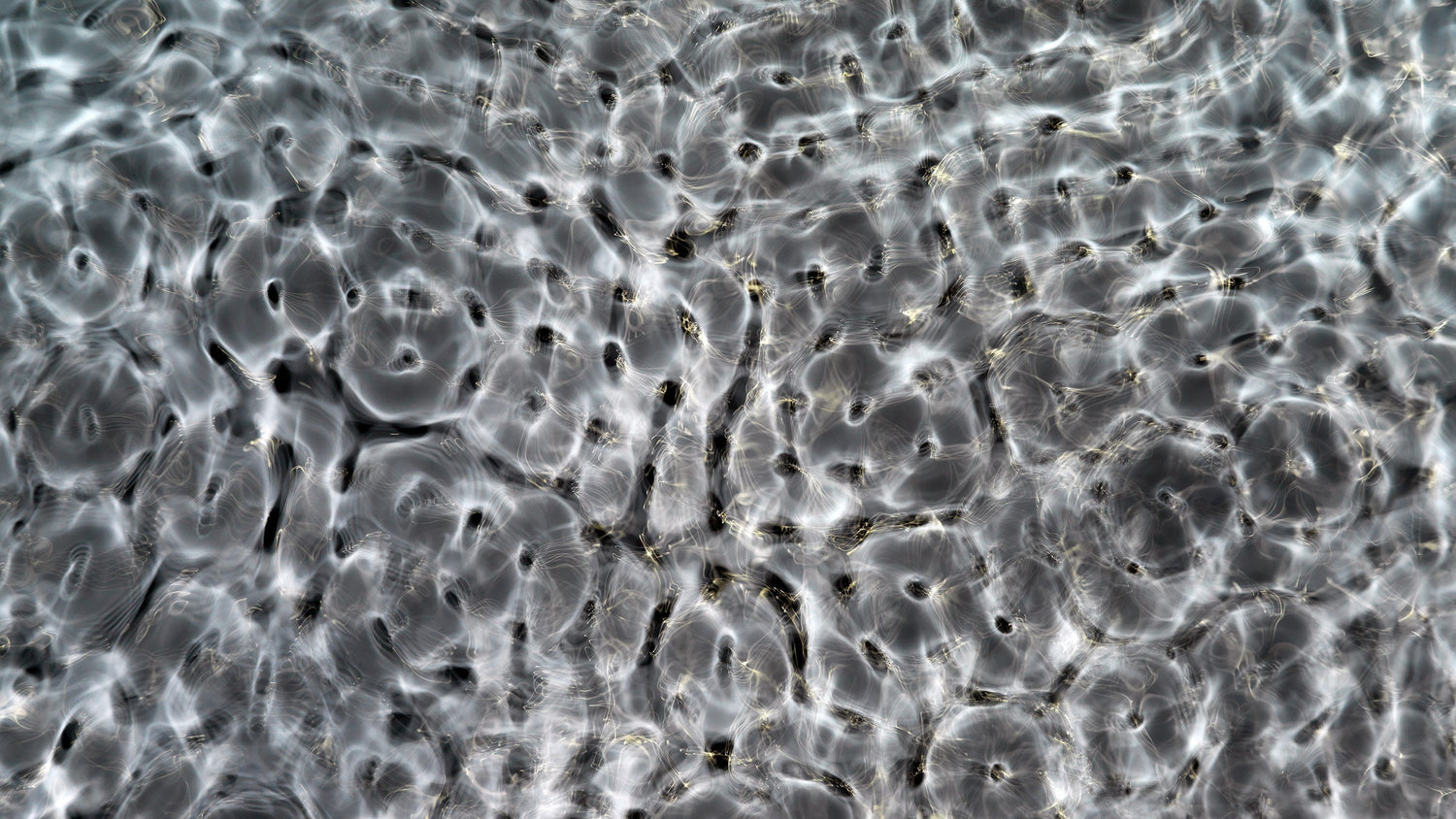
A constant fascination with moving water

Abstract Waves 000


22 Jun 10

A sad day for the art world

polaroidcap-blogSpan“Clearing Winter Storm, Yosemite National Park,” by Ansel Adams.

Please search ‘polaroid’ for previous postings on our opinion over this matter, now the collection is in private hands it will never be seen together again, either by the public or the contributing artists – a terrible affair. If our institutions cannot respect artists rights what hope is there?

The first day of a forced sale of photographs owned by the Polaroid Company – a collection that includes work by dozens of well-known artists – brought in more than $7 million Monday at Sotheby’s, breaking a record for the highest price ever paid for an Ansel Adams picture.

“Clearing Winter Storm, Yosemite National Park,” a large 1938 black-and-white landscape, went for $722,500, including a buyer’s commission to the auction house, topping the $609,000 that was paid for another Adams work in 2006.

Polaroid, founded in 1937 by Edwin H. Land, fell victim to the digital revolution, going bust in 2001 and again in 2008. To pay off creditors, a bankruptcy court in Minnesota ordered the company to sell a portion of its collection, which includes 400 photographs by Ansel Adams alone, along with prints by Chuck Close, William Wegman, Robert Rauschenberg, David Hockney, Robert Frank, Robert Mapplethorpe, Andy Warhol and Lucas Samaras, whose photograph “Ultra-Large (Hands)” went for $194,500 on Monday, breaking a previous record for Mr. Samaras set in 1989.

Polaroid’s collection grew out of the Artist Support Program, a project started by Land in which he provided some of the world’s best photographers with equipment and film and in return the photographers gave the company some of the work they made. Sotheby’s said it expected the 1,200 pieces in the sale to fetch $7.5 million to $11.5 million. As of noon on the sale’s second day, it had brought in $8.3 million.


16 Jun 10

Haus Digital – Interviews Alexander James

Haus Editor Maks delves into the world of photographer Alexander James with his his latest Body Study series exploring sexuality, the body and issues of post production.

Too often idealism is said to be destroyed by ‘selling out’. London based Photographer Alexander James proves this doesn’t have to be the case. Although Alexander can easily boast of commercial clientele including Versace, Peugeot and Chanel his exhibited art work has been compared to ‘Man Ray meets Jet Li’ in the New York Times.  Currently running the Distil Ennui studios he brings together the experience of working on community projects with underprivileged children and the homeless to his artistic practice. Exhibitions that have taken place all the way from Miami to Tokyo deliberately take place in abandoned industrial spaces with an aim of engaging sub-culture rather than the PR process. Here Haus talks to Alexander about his latest Body Study series the crux of which is to move Alexander’s art form forward without the use of sensationalism – to oppose the main media stream in order find his own path.

body-study-drop-treatment

I’ve heard the portrait artist Platon say photography is 97% psychology 3% art. Is that true for the way you work with your models?
I do shoot a fair amount of portraiture, and I agree that the scene set by the artists no matter what medium he/she is working in has a huge impact on the mood and aesthetic of the final result.

The name you use Distil Ennui which means ‘to extract the beauty in life…to appease world weariness’ seems to be justifying your art form. Is there insecurity about indulging in photography as an art form?
I have dedicated over twenty years if my life to this art-form. there is something mystical about the moment when light passes through a lens, things are different from one side to the other – I am fascinated with exploring this, why I have chosen to do this with my life is a mystery. I do think we have become very visually apathetic with the bombardment in today’s society – I am always trying to take elements out of a shot – Distilling away the impurities that I see, to re-awaken our passions in the simplest of things. Insecurity? No, absolute conviction.

What drove you to remove the process of post production and cropping from your personal work?
I see this in part as a direct response to my commercial work which is very choreographed and receives the very latest in post production techniques including CGI. I believe that there is an essential purity in presenting images ‘as-shot’ giving faith back to our audience – this is what happened and this is how it looked. The way I interpret a scene knowing that there is no post production can be a startling driving force in the artistic direction of the shoot. Great art has to unlock the valves of emotions and feeling, by this attempt to record the fact. To do this today what you need is a profound technical imagination.
 
This Body study is titled as homage to Helmut Newton a German photographer who was at one point forced into concentration camps. The gas mask and industrial chains seem to evoke this. What were the choices behind what the models do wear?
I think there is too much objectification these days; this shoot was setup so that all the models and crew were complete strangers. Over two days we shot four boys and four girls – all nude excepting for a few playful props – but all with discretion – no garish nudity for nudity’s sake. The props choice was driven by a need to create a visual parody – innocence with a twist. I am quite prudish and believe that less is more; I am not interested in seeing someone’s bits especially on film.
 
Your other influence for this shoot is Robert Mapplethorpe. His frank eroticism of black men was criticized as exploitative. How do you argue with those who still see the photography of nude female bodies as hyper sexualising them?
I shot 4 boys and 4 girls – there is a huge amount of imagery that I disagree with out there – I am certainly not trying to compete or get involved with them on that level. With this I wanted to directly influence the styling to show it as a beautiful art form – re-interpreting the human form in a more respectful way.

Both Newton and Mapplethorpe were in stark contrast to my practice, they often had a camera in the bedroom or wherever their subjects were at their most exposed; screwing in a dingy backwater club toilet or a pay by the hour hotel room. Their fixation was on transgression, sadism, evil, and death. Incapable of love, they used and abused people, including themselves. Whilst Mapplethorpe and Newton were perversely proud of their lack of technical knowledge Newton swings the balance, having a brilliant but cold eye, ruthlessly objectifying their sex partners, muses and models alike. ‘They were the forerunners in this practice, which is both mesmerizing and very unsettling to me’ says Alexander.

Where Newton and Mapplethorpe channel intimacy with their subjects to abusive extremes, I am driven by the sense of a unique and anonymous encounter.  The entire cast, crew and even the location were completely unknown to me before this two day shoot, a scenario purposely crafted. Their flesh fused with metallic tension, bodies triangulate between polished concrete, iron chains, ropes and rusted columns.

I have tried to absorbed the ‘in your face’ approach of Robert Mapplethorpe and blended it with the rich textured prowess of Helmut Newton defying their loveless and ruthless objectification. This blending of styles makes us want to see more but teases instead; and the eye is drawn more towards composition and space, creating a beautiful symmetry and empathy with his subjects; whilst remaining polished, tense and isolated.

body-study-drop-treatment-boys

Would you agree photographing in Black and White forces the viewer to acknowledge the process of photography while colour is instantly accessible?
I shoot both colour and B&W through film and digital – I think colour can be just as powerful as the perceived ‘artiness’ of B&W – yes colour is instantly accessible – but again you have a choice when shooting about which colours will come through, what light your subject is bathed in – how you decide to capture that light can have a profound effect on the resulting images.

What was the choice behind painting some of the models? Is the intention to highlight the body as an object?
They are naked yet not – they are either suited in French chalk (which we dusted over the models) or a gun metal metallic paint. I wanted to create a surface that despite the lack of clothing was impregnable – strong, sculptured, powerful. The way the light works with this more defining layer was pre-planned and in the end it worked beautifully – but was a lot of hard work for all involved – again no retouching this was all in camera.
Text: Maksymilian Fus Mickiewicz

SEE THE ARTICLE AT – HAUS DIGITAL


15 Jun 10

Surveillance Skies

A__2620


11 Jun 10

Organic Series Update

organic-fine-art-seriesorganic-fine-art-series-twisted-vines